Tuesday, April 7, 2026

Tuesday, February 24, 2026
Friday, February 20, 2026
Wednesday, April 19, 2023
BEETHOVEN'S SYMPHONY NO. 6 "PASTORAL": A PLAYLIST
Hi, friends! I'm excited that next Wednesday, April 26, at 7 pm I'll be presenting my first zoom about classical music: "Shepherds and Peasants: Beethoven's Pastoral Symphony."
I'll be talking about the background of this amazing piece, and I'll be playing a few excerpts.
But I thought you may want to listen to the symphony before you attend the discussion online. I've been listening to as many different recordings as I can over the last several weeks, and decided to choose six sixths. But that proved impossible, because there are just so many great orchestras and great conductors who have offered their interpretations.
So I chose six with a bonus of two! Choose any one or two or...
If you like you can just show up to the presentation, participate in the discussion, and save this list for listening at your leisure after the zoom meeting.
NOTE: Each of the last six videos contain chapters for each of the five movements in the symphony. If you press the words "See More" beneath the video picture, you'll see blue timing numbers that are links to each movement.
Let the listening begin. Enjoy!
SIX GREAT RECORDINGS OF THE SIXTH Maestro Szell at the height of his powers, conducting a lean and lovely version with the great American band in Cleveland!
Beethoven conducted the premiere of the symphony in Vienna in 1808. Here is a classic recording of the modern Vienna Philharmonic under the baton of Pierre Monteux.
It's often said that the Czech Philharmonic has a special way with wind music (something to do with the Bohemian countryside, I suspect). Because the Pastoral Symphony features some of Beethoven's most pungent scoring for woodwinds, this recording led by Paul Kletzki has a special appeal.
This is the recording from which I first learned the piece. The fabulous Dutch players give their all for Eugen Jochum who affectionately shapes and caresses every nuance and phrase.
Back to America for a classic version that first appeared as a budget LP. It's a fleet performance with a lively pace, and William Steinberg brings the musicians of Steeltown home with a glorious reading of the finale.
A more recent recording by a Scandinavian chamber orchestra and conductor. The reduced forces are closer to what would have been the actual size of the ensemble in Beethoven's day, and the excellent engineering gives a transparent sound stage ensuring you can hear inner details of the composer's scoring.
AND TWO BONUS RECORDINGS FOR GOOD LUCK
A lot of people don't know that the great cellist Pablo Casals was also a fine conductor, revered by his pupils and colleagues alike. This live recording from the Marlboro Festival was recorded in a converted barn on the festival's home at a farm site in Vermont. Maybe that gives it a certain bucolic glow.
Stop the presses! I was going to recommend this as a budget CD purchase, but I just found out this recording is out of print and now very expensive. So I created this final YouTube video as Bonus #2. In his last years, Bruno Walter created a series of mellow orchestral recordings with "pickup" bands in NYC and LA. This much beloved account was made with members of the LA Phil and Hollywood studio orchestras.
Friday, May 13, 2022
EVERYTHING IS ILLUMINATED: SUPPLEMENTARY MATERIALS

For an interview about the making of the film with writer/director Liev Schreiber, check out this video.
THE PIED PIPER OF HUTZOVINA is a documentary by a Czech director following the journey of Eugen Hutz, the actor who plays Alex, through Eastern Europe (Prague, Carpathia, Moscow, Siberia, and, finally, Ukraine) to revisit the places he knew as a young man and to gather more knowledge of Gypsy and Ukrainian music. It's a fascinating parallel to EVERYTHING. Here is a clip:
You can see the whole film on Amazon, Apple, Vudu, and Vimeo. It's about an hour, followed by a "Making Of" documentary about the documentary that's almost as long!
And here is the official video for Hutz's band Gogol Bordello performing "Start Wearing Purple," the song played at the end of the movie.
For an NPR feature interviewing Franklin Foer (Jonathan's older brother) about the real story about his grandfather's rescue from Nazis in Ukraine, click here.
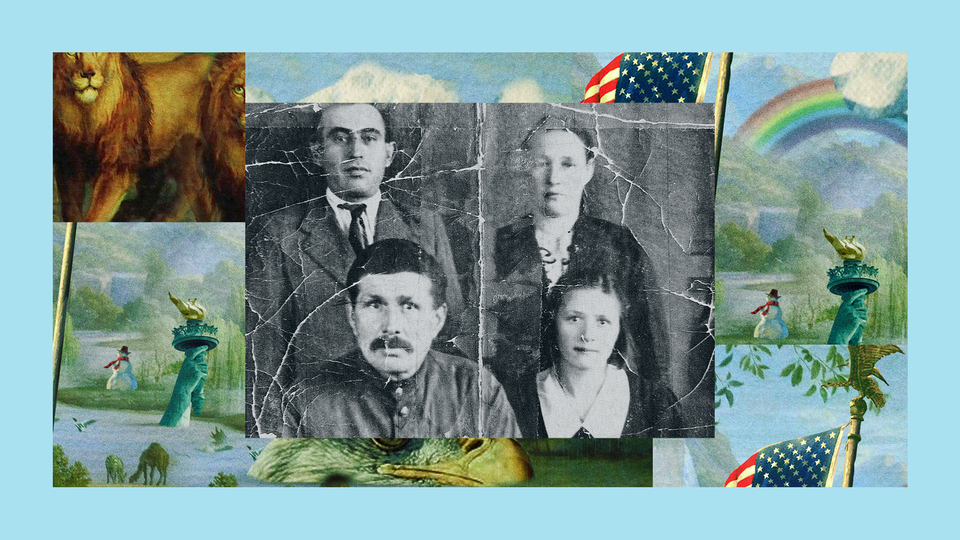 Franklin Foer’s grandfather (back left) with the Ukrainian family that protected him from the Nazis.
Saturday, November 13, 2021
NEW JERSEY POETS

STEPHEN DUNN
Beyond Hammonton
Night is longing, longing, longing,
beyond all endurance.
—Henry Miller
The back roads I’ve traveled late
at night, alone, a little drunk,
wishing I were someone
on whom nothing is lost,
are the roads by day I take
to the car wash in Hammonton
or to Blue Anchor’s
lawnmower repair shop
when the self-propel mechanism goes.
Fascinating how the lamplight
that’s beckoned
from solitary windows
gives way to white shutters
and occasionally a woman
in her yard, bending over
something conspicuously in bloom.
So much then is duty, duty, duty,
and so much
with the sun visor tilted
and destination known
can be endured.
But at night . . . no, even at night
so much can be endured.
I’ve known only one man
who left the road,
followed an intriguing light
to its source.
He told me
that he knocked many times
before it became clear to him
he must break down the door.
--Stephen Dunn

Coming Home, Garden State Parkway
Tonight the toll booth men are
congratulating the weather,
wishing me well. I'm all thank you's
and confusion, I don't know what
kind of conspiracy this is.
Then at Howard Johnson's
the pretty cashier apologizes
for the price of coffee. She wants me
to drive carefully, to think of her
on the dark, straight road.
Does she say these things to everyone?
I've done nothing different
and in the mirror
there's the same old face
not even lovers have called handsome,
the same mouth that belies
absolute conviction.
I'm alone, and maybe
there's an underworld of those alone
and maybe tonight I've entered it--
the instant, safe intimacy
guaranteed to move on.
On the car radio
comes a noisy current song
and then an old, melodic lie
about love.
Afterwards, the disc jockey
speaks to all of us on the road,
he wants us to understand
the danger of the other man,
watch out, he says, for the blind side.
I'm going 70, the winter outside
is without snow, it's hard anymore
to be sure about anything.
Next toll station, I feel for a quarter--
the exact change
but I swerve
(as I knew I would)
to the woman holding out her hand.
She neither smiles nor speaks;
I try to believe
she's shy.
I'd like to put my hand in her hand,
to keep alive
this strange human streak I'm on.
But there's only money between us,
silver and flesh
meeting in a familiar goodbye.
--Stephen Dunn

JOHN CIARDI
The Catalpa
The catalpa’s white week is ending there
in its corner of my yard. It has its arms full
of its own flowering now, but the least air
spills off a petal and a breeze lets fall
whole coronations. There is not much more
of what this is. Is every gladness quick?
That tree’s a nuisance, really. Long before
the summer’s out, its beans, long as a stick,
will start to shed. And every year one limb
cracks without falling off and hangs there dead
till I get up and risk my neck to trim
what it knows how to lose but not to shed.
I keep it only for this one white pass.
The end of June’s its garden; July, its Fall;
all else, the world remembering what it was
in the seven days of its visible miracle.
What should I keep if averages were all?

The Bird in Whatever Name
A bird with a name it does not itself
recognize, and I cannot recall
if ever I knew it, and no matter
lives off the great gross Rhinoceros of Africa.
The slathering hide of the great gross Rhinoceros,
slabbed like a river in a stiff wind,
is rancid at the bent seams, and clogged
with lice and fly-grubs at the pores and pittings.
The Rhino-bird, whatever its unknown name,
attends its warty barge through the jungle,
the feast of its own need picking the tickle
of many small corruptions from behemoth
who, impervious to all roarers, is yet defenseless, alone,
against the whine of the fly in his ear, and stricken
to helpless furies by the squirm of the uncoiling grub
tucked into the soft creases of the impenetrable.
My bird-and oh it is my bird and yours!-crawls
him as kissingly as saints their god, springs
circling over him to foretell all coming,
descends in the calm lapses to ride a-perch on his horn
or snout. Even into the mouth and nares of the beast
he goes-so some have reported-to pick infection
from power. And can the beast not love
the bird that comes to him with songs and mercies?
-Oh jungle, jungle, in whose ferns life dreamed itself
and woke, saw itself and was, looked back
and found in every bird and beast its feature,
told of itself, whatever name is given.
--John Ciardi
Snowy Heron
What lifts the heron leaning on
the air
I praise without a name. A crouch, a flare,
a long stroke through the cumulus of trees,
a shaped thought at the sky — then gone. O rare!
Saint Francis, being happiest on his knees,
would have cried Father! Cry anything you please
But praise. By any name or
none. But praise
the white original burst that lights
the heron on his two soft kissing kites.
When saints praise heaven lit by doves and rays,
I sit by pond scums till the air recites
Its heron back. And doubt all else. But praise.
--John Ciardi

Poem
As the cat
climbed over
the top of
the jamcloset
first the right
forefoot
carefully
then the hind
stepped down
into the pit of
the empty
flowerpot.
-- William Carlos Williams

The Great Figure
Among the rain
and lights
I saw the figure 5
in gold
on a red
firetruck
moving
tense
unheeded
to gong clangs
siren howls
and wheels rumbling
through the dark city.
--William Carlos Williams

From Book I, Paterson (published from 1946-1958)
Paterson lies in the valley under the Passaic Falls
its spent waters forming the outline of his back. He
lies on his right side, head near the thunder
of the waters filling his dreams! Eternally asleep,
his dreams walk about the city where he persists
incognito. Butterflies settle on his stone ear.
Immortal he neither moves nor rouses and is seldom
seen, though he breathes and the subtleties of his machinations
drawing their substance from the noise of the pouring river
animate a thousand automations. Who because they
neither know their sources nor the sills of their
disappointments walk outside their bodies aimlessly
for the most part,
locked and forgot in their desires-unroused.
—Say it, no ideas but in things—
nothing but the blank faces of the houses
and cylindrical trees
bent, forked by preconception and accident—
split, furrowed, creased, mottled, stained—
secret—into the body of the light!
From above, higher than the spires, higher
even than the office towers, from oozy fields
abandoned to gray beds of dead grass,
black sumac, withered weed-stalks,
mud and thickets cluttered with dead leaves-
the river comes pouring in above the city
and crashes from the edge of the gorge
in a recoil of spray and rainbow mists-
(What common language to unravel?
. . .combed into straight lines
from that rafter of a rock's
lip.)
A man like a city and a woman like a flower
—who are in love. Two women. Three women.
Innumerable women, each like a flower.
But
only one man—like a city.
--William Carlos Williams

Gulf Music
Mallah walla tella bella. Trah mah trah-la, la-la-la,
Mah la belle. Ippa Fano wanna bella, wella-wah.
The hurricane of September 8, I900 devastated
Galveston, Texas. Some 8,ooo people died.
The Pearl City almost obliterated. Still the one worst
Calamity in American history, Woh mallah-walla.
Eight years later Morris Eisenberg sailing from Lubeck
Entered the States through the still-wounded port of Galveston.
i908, eeloo hotesy, hotesy-ahnoo, hotesy ahnoo mi-Mizraim.
Or you could say "Morris" was his name. A Moshe.
Ippa Fano wanna bella woh. The New Orleans musician called
Professor Longhair was named Henry Roeland Byrd.
Not heroic not nostalgic not learned. Made-up names:
Hum a few bars and we'll homme-la-la. Woh ohma-dallah.
Longhair or Henry and his wife Alice joined the Civil Defense
Special Forces 714. Alice was a Colonel, he a Lieutenant.
Here they are in uniforms and caps, pistols in holsters.
Hotesy anno, Ippa Fano trah ma dollah, tra la.
Morris took the name "Eisenberg" after the rich man from
His shtetl who in I908 owned a town in Arkansas.
Most of this is made up, but the immigration papers did
Require him to renounce all loyalty to Czar Nicholas.
As he signed to that, he must have thought to himself
The Yiddish equivalent of No Problem, Mah la
Hotesy hotesy-ahno. Wella-mallah widda dallah,
Mah fanna-well. A townful of people named Eisenberg.
The past is not decent or orderly, it is made-up and devious.
The man was correct when he said it's not even past.
Look up at the waters from the causeway where you stand:
Lime causeway made of grunts and halfway-forgettings
On a foundation of crushed oyster shells. Roadbed
Paved with abandonments, shored up by haunts.
Becky was a teenager married to an older man. After she
Met Morris, in I9IO or so, she swapped Eisenbergs.
They rode out of Arkansas on his motorcycle, well-ah-way.
Wed-away. "Mizraim" is Egypt, I remember that much.
The storm bulldozed Galveston with a great rake of debris,
In the September heat the smell of the dead was unbearable.
Hotesy ahnoo. "Professor" the New Orleans title
For any piano player. He had a Caribbean left hand,

A boogie-woogie right. Civil Defense Special Forces 7I4
Organized for disasters, mainly hurricanes. Floods.
New Orleans style borrowing this and that, ah wail-ah-way la-la,
They probably got "7I4" from Joe Friday's badge number
On Dragnet. Jack Webb chose the number in memory
Of Babe Ruth's 714 home runs, the old record.
As living memory of the great hurricanes of the thirties
And the fifties dissolved, Civil Defense Forces 714
Also dissolved, washed away for well or ill - yet nothing
Ever entirely abandoned though generations forget, and ah
Well the partial forgetting embellishes everything all the more:
Alla-mallah, mi-Mizraim, try my tra-la, hotesy-totesy.
Dollars, dolors. Callings and contrivances. King Zulu. Comus.
Sephardic ju-ju and verses. Voodoo mojo, Special Forces.
Henry formed a group named Professor Longhair and his
Shuffling Hungarians. After so much renunciation
And invention, is this the image of the promised end?
All music haunted by all the music of the dead forever.
Becky haunted forever by Pearl the daughter she abandoned
For love, 0 try my tra-la-la, ma la belle, mah walla-woe.
--Robert Pinsky
The Shirt
The back, the yoke, the yardage. Lapped seams,
The nearly invisible stitches along the collar
Turned in a sweatshop by Koreans or Malaysians
Gossiping over tea and noodles on their break
Or talking money or politics while one fitted
This armpiece with its overseam to the band
Of cuff I button at my wrist. The presser, the cutter,
The wringer, the mangle. The needle, the union,
The treadle, the bobbin. The code. The infamous blaze
At the Triangle Factory in nineteen-eleven.
One hundred and forty-six died in the flames
On the ninth floor, no hydrants, no fire escapes—
The witness in a building across the street
Who watched how a young man helped a girl to step
Up to the windowsill, then held her out
Away from the masonry wall and let her drop.
And then another. As if he were helping them up
To enter a streetcar, and not eternity.
A third before he dropped her put her arms
Around his neck and kissed him. Then he held
Her into space, and dropped her. Almost at once
He stepped to the sill himself, his jacket flared
And fluttered up from his shirt as he came down,
Air filling up the legs of his gray trousers—
Like Hart Crane’s Bedlamite, “shrill shirt ballooning.”
Wonderful how the pattern matches perfectly
Across the placket and over the twin bar-tacked
Corners of both pockets, like a strict rhyme
Or a major chord. Prints, plaids, checks,
Houndstooth, Tattersall, Madras. The clan tartans
Invented by mill-owners inspired by the hoax of Ossian,
To control their savage Scottish workers, tamed
By a fabricated heraldry: MacGregor,
Bailey, MacMartin. The kilt, devised for workers
To wear among the dusty clattering looms.
Weavers, carders, spinners. The loader,
The docker, the navvy. The planter, the picker, the sorter
Sweating at her machine in a litter of cotton
As slaves in calico headrags sweated in fields:
George Herbert, your descendant is a Black
Lady in South Carolina, her name is Irma
And she inspected my shirt. Its color and fit
And feel and its clean smell have satisfied
Both her and me. We have culled its cost and quality
Down to the buttons of simulated bone,
The buttonholes, the sizing, the facing, the characters
Printed in black on neckband and tail. The shape,
The label, the labor, the color, the shade. The shirt.
--Robert Pinsky

Nick Virgilio
lily:
out of the water . . .
out of itself
Bass
picking bugs
off the moon
my spring love affair:
the old upright Remington
wears a new ribbon
on the other end
of the kite—
a pigtailed girl
my father and I
with no footprints to follow
step into deep snow
flag-covered coffin:
the shadow of the buler
slips into the grave
no autumn moon
to hang
a verse on

Insect Life of Florida
In those days I thought their endless thrum
was the great wheel that turned the days, the nights.
In the throats of hibiscus and oleander
I’d see them clustered yellow, blue, their shells
enameled hard as the sky before the rain.
All that summer, my second, from city
to city my young father drove the black coupe
through humid mornings I’d wake to like fever
parceled between luggage and sample goods.
Afternoons, showers drummed the roof,
my parents silent for hours. Even then I knew
something of love was cruel, was distant.
Mother leaned over the seat to me, the orchid
Father’d pinned in her hair shriveled
to a purple fist. A necklace of shells
coiled her throat, moving a little as she
murmured of alligators that float the rivers
able to swallow a child whole, of mosquitoes
whose bite would make you sleep a thousand years.
And always the trance of blacktop shimmering
through swamps with names like incantations—
Okeefenokee, where Father held my hand
and pointed to an egret’s flight unfolding
white above swamp reeds that sang with insects
until I was lost, until I was part
of the singing, their thousand wings gauze
on my body, tattooing my skin.
Father rocked me later by the water,
the motel balcony, singing calypso
with the Jamaican radio. The lyrics
a net over the sea, its lesson
of desire and repetition. Lizards flashed
over his shoes, over the rail
where the citronella burned merging our
shadows—Father’s face floating over mine
in the black changing sound
of night, the enormous Florida night,
metallic with cicadas, musical
and dangerous as the human heart.
--Lynda Hull

Chinese New Year
The dragon is in the street dancing beneath windows
pasted with colored squares, past the man
who leans into the phone booth’s red pagoda, past
crates of doves and roosters veiled
until dawn. Fireworks complicate the streets
with sulphur as people exchange gold
and silver foil, money to appease ghosts
who linger, needy even in death. I am
almost invisible. Hands could pass through me
effortlessly. This is how it is
to be so alien that my name falls from me, grows
untranslatable as the shop signs,
the odors of ginseng and black fungus that idle
in the stairwell, the corridor where
the doors are blue months ajar. Hands
gesture in the smoke, the partial moon
oof a face. For hours the soft numeric
click of mah-jongg tiles drifts
down the hallway where languid Mai trails
her musk of sex and narcotics.
There is no grief in this, only the old year
consuming itself, the door knob blazing
in my hand beneath the lightbulb’s electric jewel.
Between voices and fireworks
wind works bricks to dust—hush, hush—
no language I want to learn. I can touch
the sill worn by hands I’ll never know
in this room with its low table
where I brew chrysanthemum tea. The sign
for Jade Palace sheds green corollas
on the floor. It’s dangerous to stand here
in the chastening glow, darkening
my eyes in the mirror with the gulf of the rest
of my life widening away from me, waiting
for the man I married to pass beneath
the sign of the building, to climb
the five flights and say his Chinese name for me.
He’ll rise up out of the puzzling streets
where men pass bottles of rice liquor, where
the new year is liquor, the black bottle
the whole district is waiting for, like
some benevolent arrest—the moment
when men and women turn to each other and dissolve
each bad bet, every sly mischance,
the dalliance of hands. They turn in lamplight
the way I turn now. Wai Min is in the doorway.
He brings fish. He brings lotus root.
He brings me ghost money.
--Lynda Hull

Star Ledger
Almost time to dress for the sun’s total eclipse
so the child pastes one last face
in her album of movie stars–Myrna Loy
and Olivia de Havilland–names meant
to conjure
sultry nights, voluptuous turns across
some dance floor borne on clouds.
Jean Harlow.
Clipped from the Newark evening paper, whole galaxies
of splendid starlets gaze, fixed to
violet pages
spread drying on the kitchen table. The child whispers
their names when she tests
“lorgnettes”
made that morning out of shirtboards, old film
negatives gleaned from her
grandmother’s hat box.
Through phony opera glasses, hall lights blur
stained sepia above her, and her
grandmother’s
room is stained by a tall oak’s crown, yellow
in the window. Acorns crack against
asphalt
three floors down. The paper promised
“a rare conjunction of sun and moon
and earth.”
Her grandmother brushed thick gray hair.
Cut glass bottles and jewel cases.
Above the corset her back was soft, black moles
she called her “melanomas” dusted
across
powdery skin like a night sky, inside out.
The Spanish fan dangles from her
wrist
and when she stands she looks like an actress
from the late-night movies. The
child sifts
costume brooches, glass rubies and sapphires,
to find the dark gold snake ring
with emerald chips
for eyes. She carries the miniature hourglass
to the sagging porch, then waiting
turns it over
and over. Uncertain in high heels, she teeters
and the shawl draped flamenco-style
keeps sliding off
her shoulder, so she glances up the block to Girl Scouts
reeling down the flag. The child
hates their dull uniforms,
how they scatter shrieking through leafsmoke and the sheen
of fallen chestnuts. She touches the
ring, heavy
on a ribbon circling her neck, then thinks she’ll sew
the album pages with green
embroidery silk.
Her grandmother snaps the fan and they raise lorgnettes
to the sun’s charcoaled face, its
thin wreath
of fire. Quiet, the Girl Scouts bow their heads–sleek
Italian ones and black girls with
myriad tight braids.
Streetlights hum on, then the towers of Manhattan flare
beyond the river. The earth must
carve its grave ellipse
through desert space, through years and histories
before it will cross with sun and
moon this way again.
Minor starlets in the child’s album will fade and tatter,
fleeting constellations with names
flimsy as
the shawl that wraps her shoulders. She’ll remember this
as foolish. The girls by the flag
will mostly leave
for lives of poverty, crippled dreams, and Newark
will collapse to burn like another
dying star.
But none of this has happened. Afternoon has stilled
with the eclipse that strips them of
their shadows,
so each one stands within their own brief human orbit
while the world reverses, then
slowly, recovers.
--Lynda Hull

GREGORY PARDLO
I was born in minutes in a roadside kitchen a skillet
whispering my name. I was born to rainwater and lye;
I was born across the river where I
was borrowed with clothespins, a harrow tooth,
broadsides sewn in my shoes. I returned, though
it please you, through no fault of my own,
pockets filled with coffee grounds and eggshells.
I was born still and superstitious; I bore an unexpected burden.
I gave birth, I gave blessing, I gave rise to suspicion.
I was born abandoned outdoors in the heat-shaped air,
air drifting like spirits and old windows.
I was born a fraction and a cipher and a ledger entry;
I was an index of first lines when I was born.
I was born waist-deep stubborn in the water crying
ain’t I a woman and a brother I was born
to this hall of mirrors, this horror story I was
born with a prologue of references, pursued
by mosquitoes and thieves, I was born passing
off the problem of the twentieth century: I was born.
I read minds before I could read fishes and loaves;
I walked a piece of the way alone before I was born.
--Gregory Pardlo

Double Dutch
The girls turning double-dutch
bob & weave like boxers pulling
punches, shadowing each other,
sparring across the slack cord
casting parabolas in the air. They
whip quick as an infant’s pulse
and the jumper, before she
enters the winking, nods in time
as if she has a notion to share,
waiting her chance to speak. But she’s
anticipating the upbeat
like a bandleader counting off
the tune they are about to swing into.
The jumper stair-steps into mid-air
as if she’s jumping rope in low-gravity,
training for a lunar mission. Airborne a moment
long enough to fit a second thought in,
she looks caught in the mouth bones of a fish
as she flutter-floats into motion
like a figure in a stack of time-lapse photos
thumbed alive. Once inside,
the bells tied to her shoestrings rouse the gods
who’ve lain in the dust since the Dutch
acquired Manhattan. How she dances
patterns like a dust-heavy bee retracing
its travels in scale before the hive. How
the whole stunning contraption of girl and rope
slaps and scoops like a paddle boat.
Her misted skin arranges the light
with each adjustment and flex. Now heather-
hued, now sheen, light listing on the fulcrum
of a wrist and the bare jutted joints of elbow
and knee, and the faceted surfaces of muscle,
surfaces fracturing and reforming
like a sun-tickled sleeve of running water.
She makes jewelry of herself and garlands
the ground with shadows.
--Gregory Pardlo

Corsons Inlet
I went for a walk over the dunes again this morning
to the sea,
then turned right along
the surf
rounded a naked headland
and returned
along the inlet shore:
it was muggy sunny, the wind from the sea steady and high,
crisp in the running sand,
some breakthroughs of sun
but after a bit
continuous overcast:
the walk liberating, I was released from forms,
from the perpendiculars,
straight lines, blocks, boxes, binds
of thought
into the hues, shadings, rises, flowing bends and blends
of sight:
I allow myself eddies of meaning:
yield to a direction of significance
running
like a stream through the geography of my work:
you can find
in my sayings
swerves of action
like the inlet’s cutting edge:
there are dunes of motion,
organizations of grass, white sandy paths of remembrance
in the overall wandering of mirroring mind:
but Overall is beyond me: is the sum of these events
I cannot draw, the ledger I cannot keep, the accounting
beyond the account:
in nature there are few sharp lines: there are areas of
primrose
more or less dispersed;
disorderly orders of bayberry; between the rows
of dunes,
irregular swamps of reeds,
though not reeds alone, but grass, bayberry, yarrow, all ...
predominantly reeds:
I have reached no conclusions, have erected no boundaries,
shutting out and shutting in, separating inside
from outside: I have
drawn no lines:
as
manifold events of sand
change the dune’s shape that will not be the same shape
tomorrow,
so I am willing to go along, to accept
the becoming
thought, to stake off no beginnings or ends, establish
no walls:
by transitions the land falls from grassy dunes to creek
to undercreek: but there are no lines, though
change in that transition is clear
as any sharpness: but “sharpness” spread out,
allowed to occur over a wider range
than mental lines can keep:
the moon was full last night: today, low tide was low:
black shoals of mussels exposed to the risk
of air
and, earlier, of sun,
waved in and out with the waterline, waterline inexact,
caught always in the event of change:
a young mottled gull stood free on the shoals
and ate
to vomiting: another gull, squawking possession, cracked a crab,
picked out the entrails, swallowed the soft-shelled legs, a ruddy
turnstone running in to snatch leftover bits:
risk is full: every living thing in
siege: the demand is life, to keep life: the small
white blacklegged egret, how beautiful, quietly stalks and spears
the shallows, darts to shore
to stab—what? I couldn’t
see against the black mudflats—a frightened
fiddler crab?
the news to my left over the dunes and
reeds and bayberry clumps was
fall: thousands of tree swallows
gathering for flight:

an order held
in constant change: a congregation
rich with entropy: nevertheless, separable, noticeable
as one event,
not chaos: preparations for
flight from winter,
cheet, cheet, cheet, cheet, wings rifling the green clumps,
beaks
at the bayberries
a perception full of wind, flight, curve,
sound:
the possibility of rule as the sum of rulelessness:
the “field” of action
with moving, incalculable center:
in the smaller view, order tight with shape:
blue tiny flowers on a leafless weed: carapace of crab:
snail shell:
pulsations of order
in the bellies of minnows: orders swallowed,
broken down, transferred through membranes
to strengthen larger orders: but in the large view, no
lines or changeless shapes: the working in and out, together
and against, of millions of events: this,
so that I make
no form of
formlessness:
orders as summaries, as outcomes of actions override
or in some way result, not predictably (seeing me gain
the top of a dune,
the swallows
could take flight—some other fields of bayberry
could enter fall
berryless) and there is serenity:
no arranged terror: no forcing of image, plan,
or thought:
no propaganda, no humbling of reality to precept:
terror pervades but is not arranged, all possibilities
of escape open: no route shut, except in
the sudden loss of all routes:
I see narrow orders, limited tightness, but will
not run to that easy victory:
still around the looser, wider forces work:
I will try
to fasten into order enlarging grasps of disorder, widening
scope, but enjoying the freedom that
Scope eludes my grasp, that there is no finality of vision,
that I have perceived nothing completely,
that tomorrow a new walk is a new walk.
--A. R. Ammons
Coming Clearing
A clarifying high
wind in October's
shanky last days -
maples luminous
mounds or
glacial hills dressed
down shiny to outline:
and thickets
only darkness could travel
in, clearly
keeping nothing worth
looking for: October
winds change things,
from
the scarlet of
frost-scorched boughs
to whistling gray
branch and clatter,
readying plenty of
clarification
coming ice can seal.
--A.R. Ammons